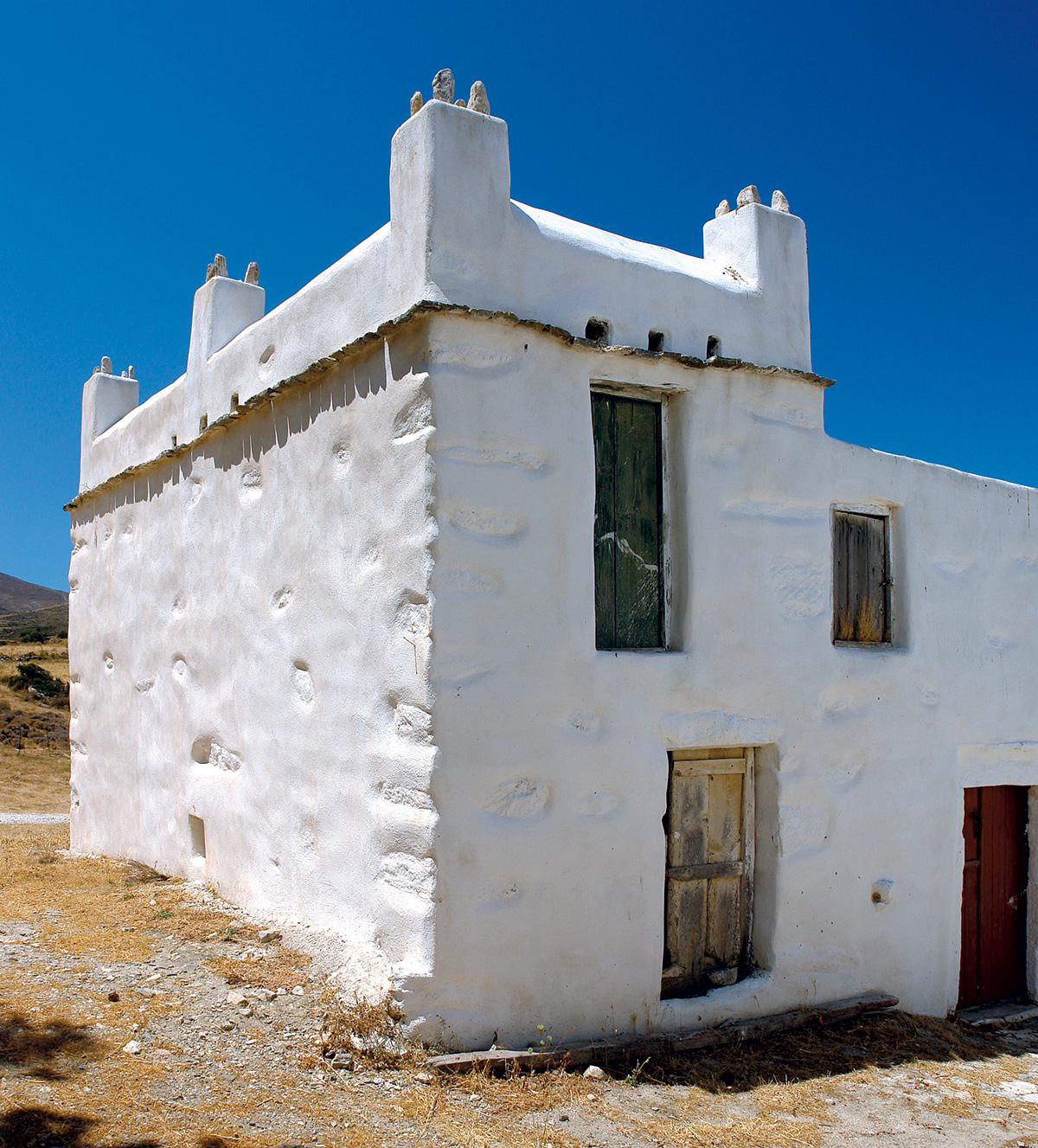
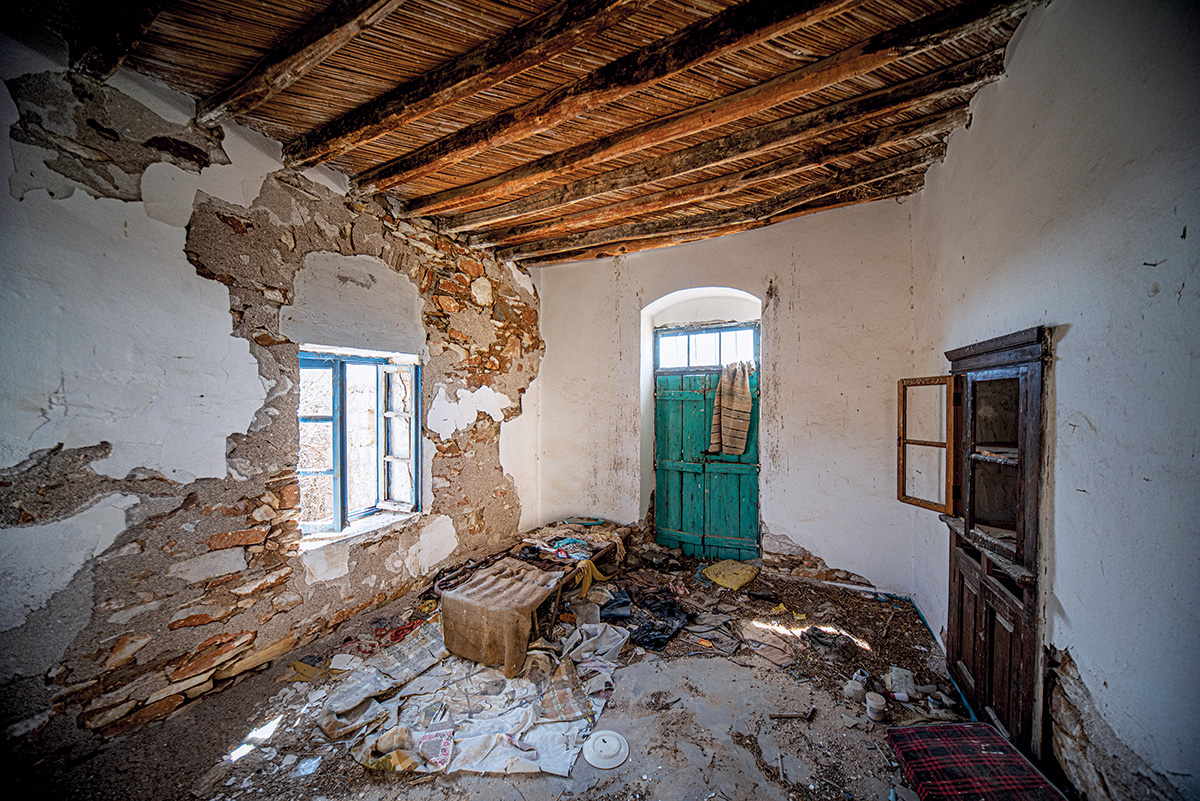
Houses consisted of one or two main rooms serving as bedrooms, often equipped with built-in beds (rogos) that also served for grain storage
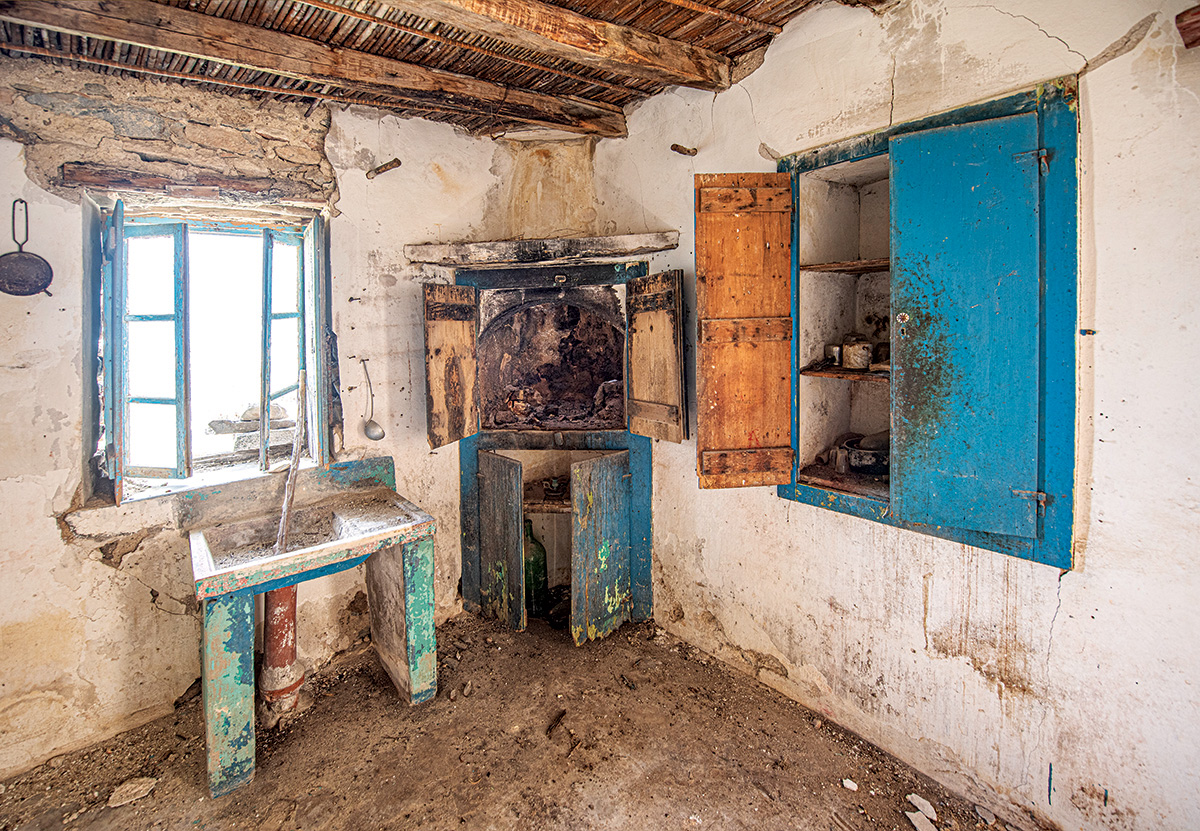
The interior included a kitchen with a corner fireplace (parostia), a sink built into the window ledge, and small storage spaces in wall recesses (parathyres)
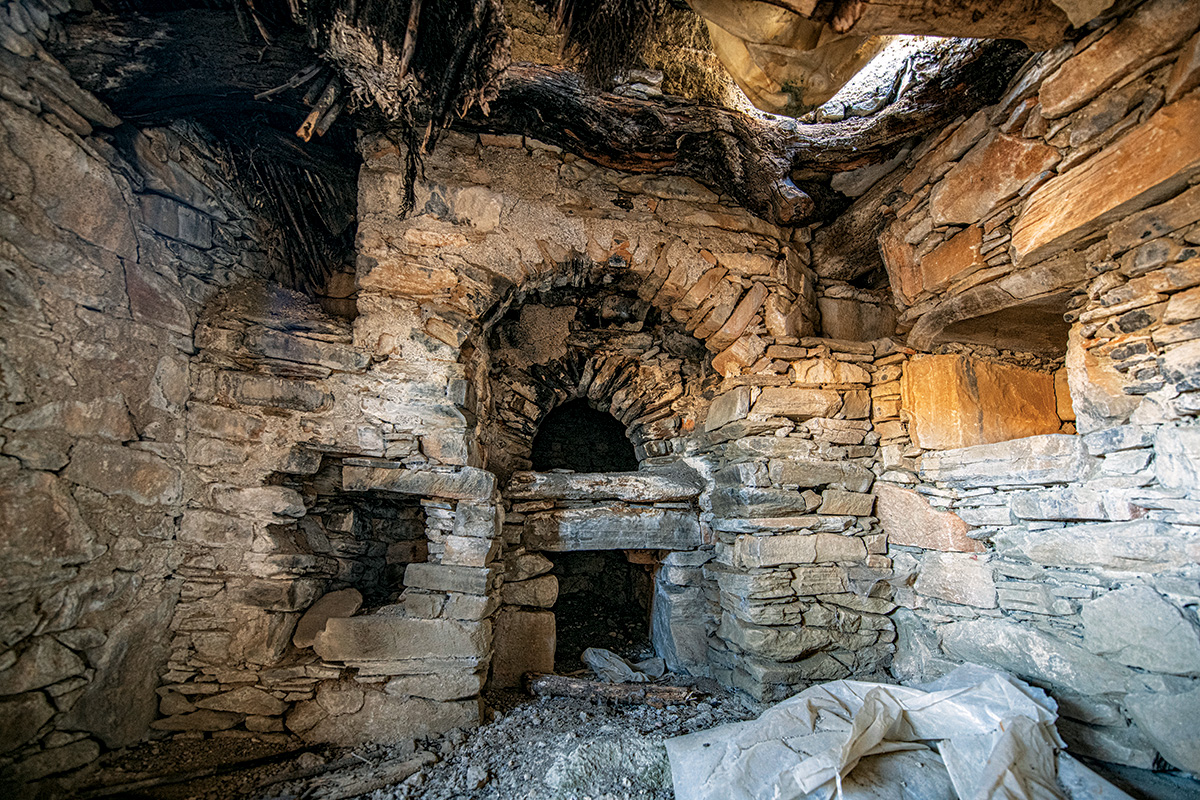
In most cases, there was a separate indoor or outdoor oven for bread baking
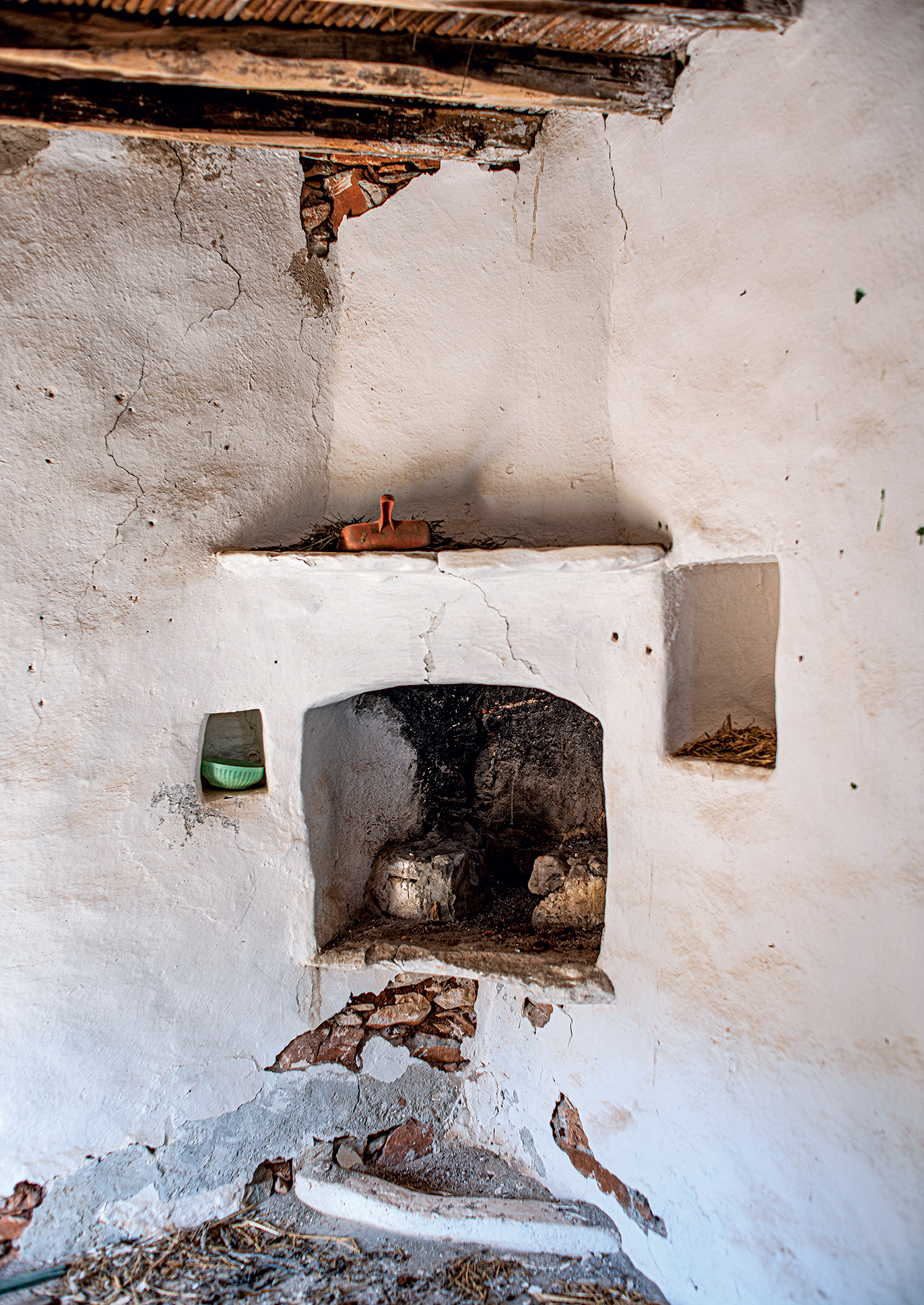
A typical corner fireplace (parostia)
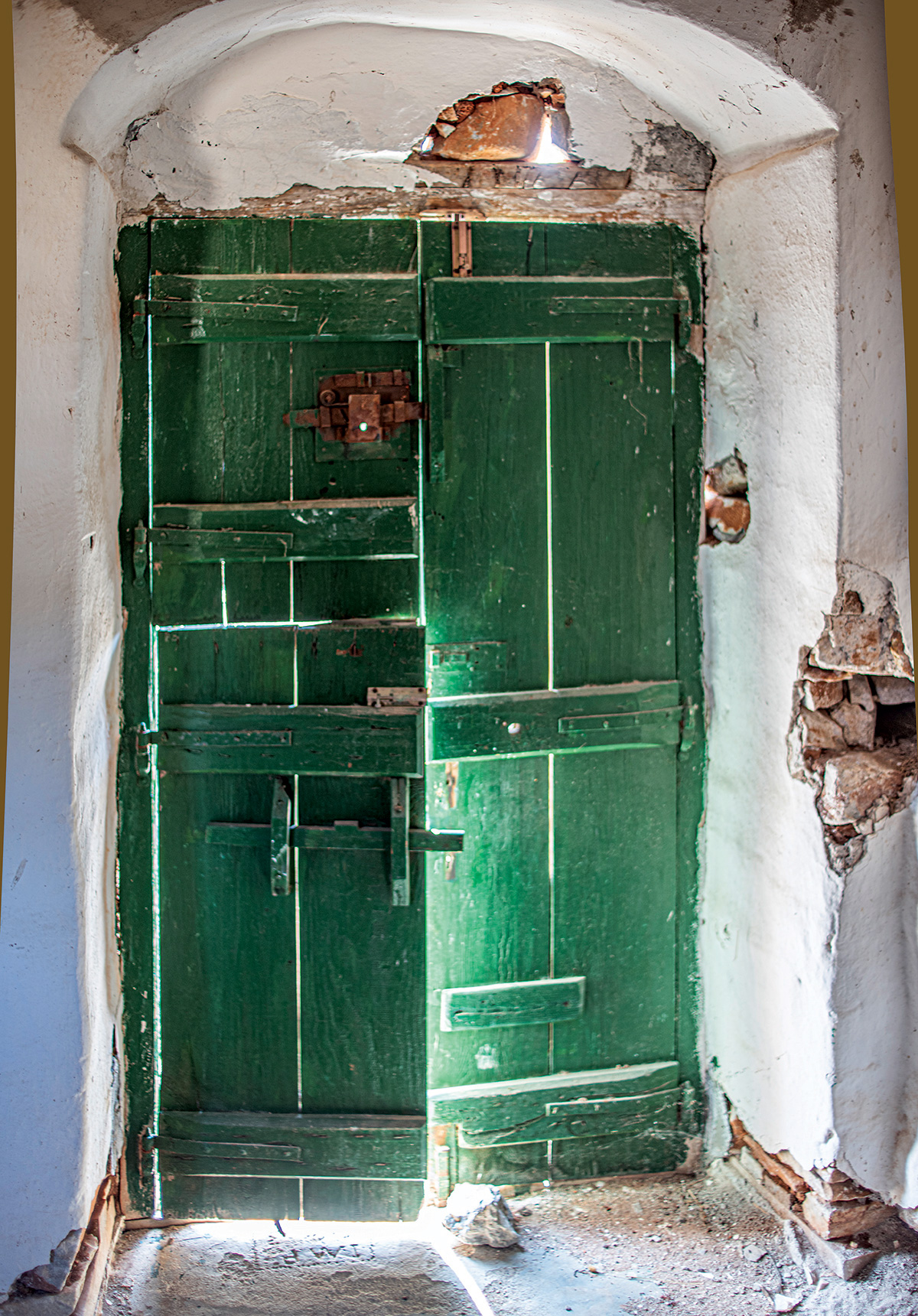
The wooden doors and windows were handmade and secured with iron bars (kontomiri)
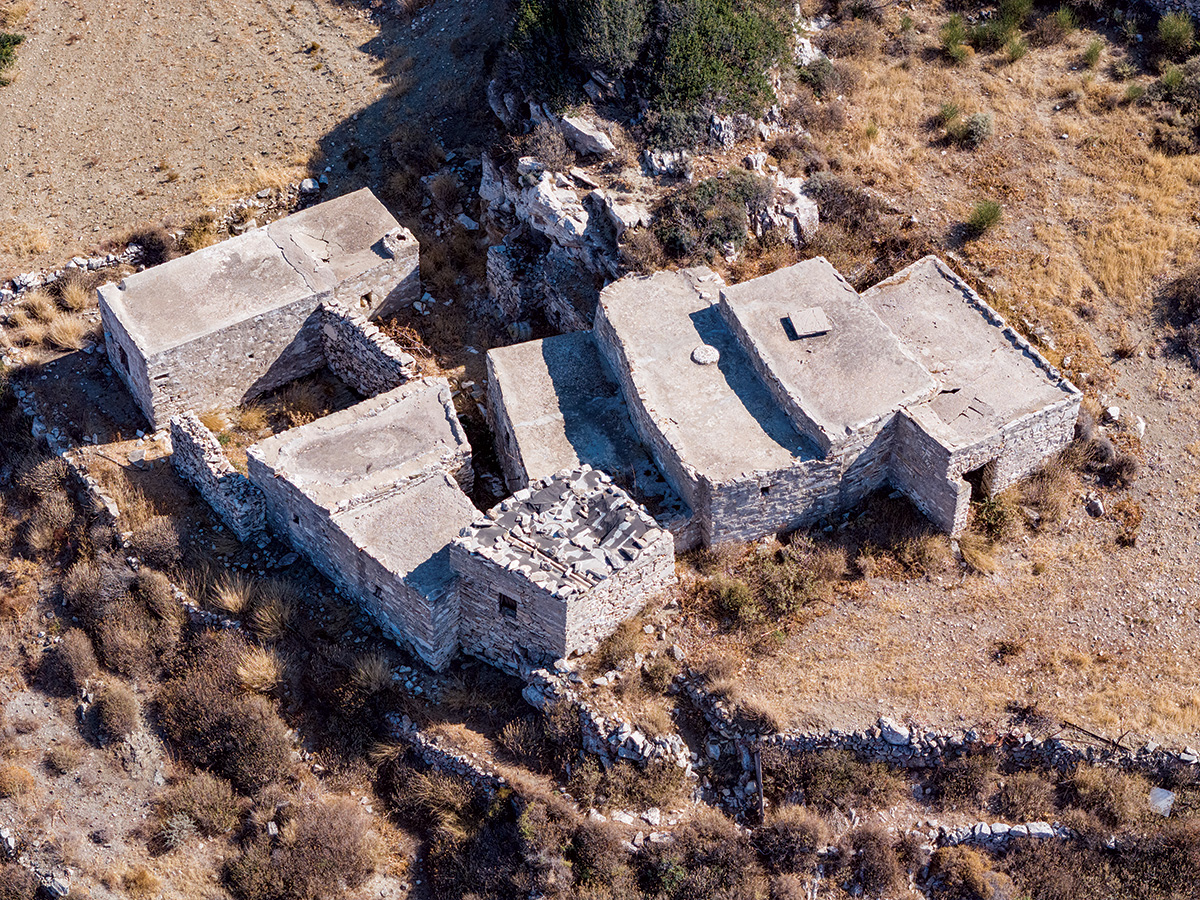
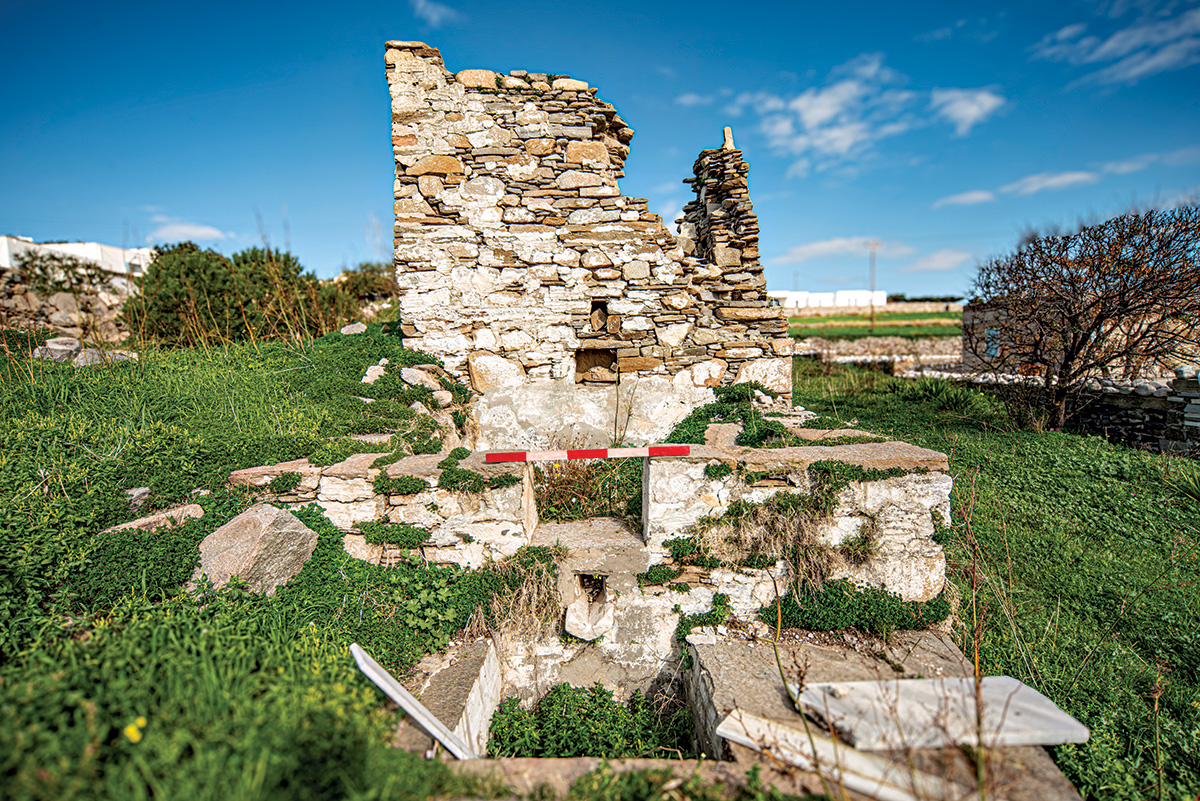
The northern side of a typical farmhouse in the area of Chorioudaki. The northern side of the house had limited openings for protection against winds
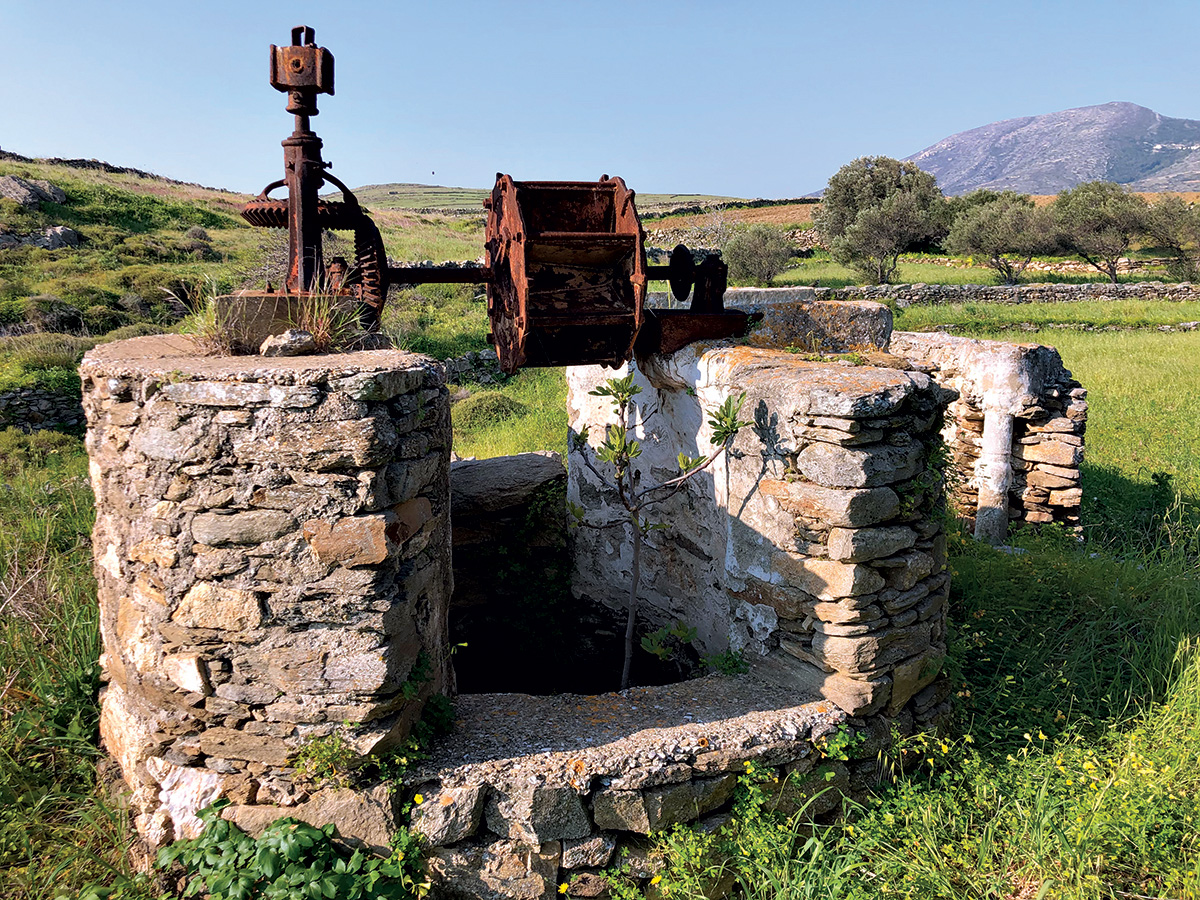
Water management was vital, there were wells with mechanisms like the magano that facilitated the pumping from greater depths to a cistern that utilized a network of canals to transport water for irrigating fields
The dovecote for breeding pigeons (peristerionas), which were used both for food and provided fertilizer
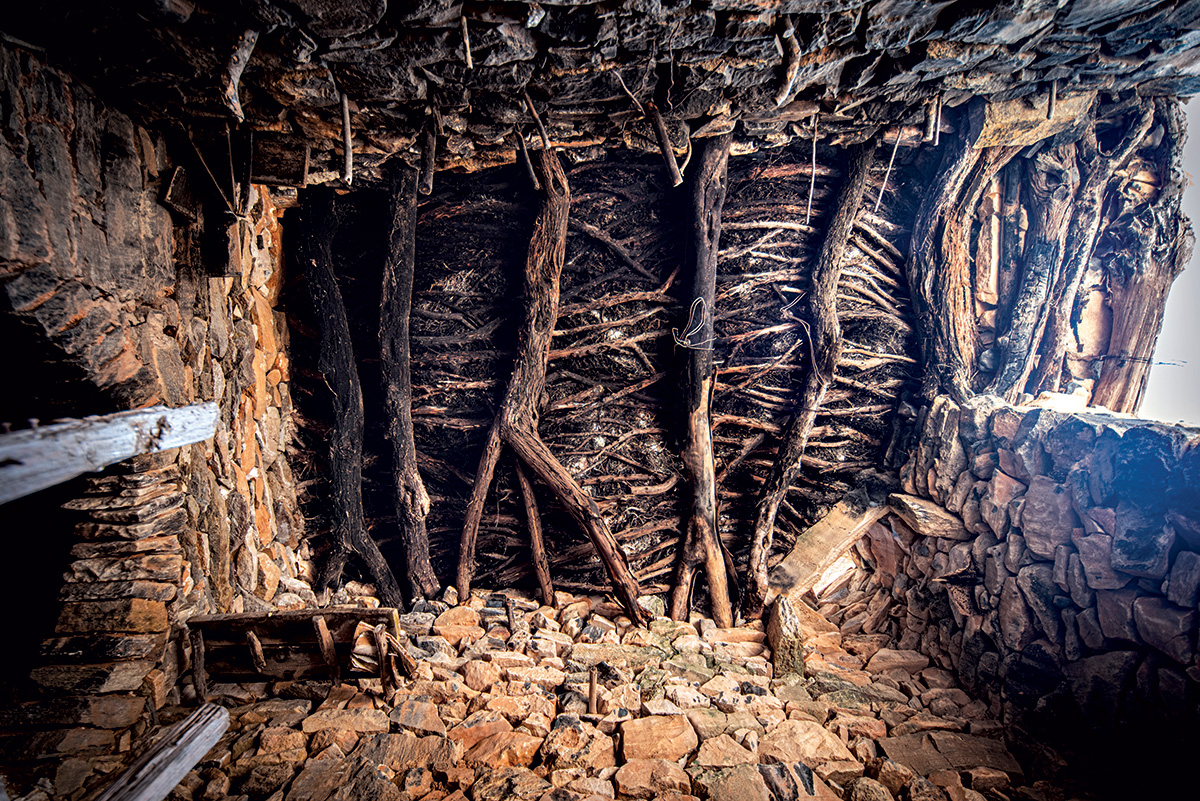
Roofs were made with wooden beams, reeds, and seaweed, which served as insulating materials
KATIKIÉS, THE FARMHOUSES OF PAROS
Text & photos: George Kavallis
“A house big enough to fit in and a field as far as the eye can see”
In studying the Cycladic architecture of the past, we discover at least two fundamental truths.
The first is its honesty of construction. Take, for instance, the materials used: stone and red soil are the main structural materials. Marble –more precious– is used decoratively to frame doors and windows. Local wood (fídes), reeds and dried seaweed are utilized in the construction of flat roofs.
The sand and lime blend seamlessly into the plaster which follows the natural contours of the stone beneath, without the use of guides, generating a dynamic interplay with the light.
Everything is visible and no material pretends to be something it’s not.
The second truth lies in the form, which had a single goal: to serve what is essential and vital. Thus, in the castle-villages the guiding principle of architecture was security – protection from pirates. Everything else – size, lighting, and ventilation – came second. By contrast, the katikiés (the Parian farmhouses) showcase structural modules that are arranged flexibly, responding to the everyday needs of each rural household for an oven, a stable, a dovecote, and more.
Today, the dominant image of Paros is that of a fancy postcard – a polished setting that mars the island’s lasting beauty, designed for tourists and investors. Yet, it is now inhabited by us all, permanent residents and visitors.
The following pages feature a summary of the research carried out by Giorgos Kavallis (Founder & Designer of “KALLIGRAMMON”) and documented by his own photographic material, which explores the historical and morphological evolution of traditional Parian dwellings. It is based on the typology of the Cycladic farmhouse, and was presented on 20 January 2025 at the Dimitrakopoulos Building in Parikia.
The Parian Farmhouse is a representative example of traditional Cycladic rural architecture, which developed in response to local climatic and geomorphological conditions.
Its typology is based on additive construction, meaning the gradual expansion of the house according to the needs of the family. This structure is believed to have arrived in the Aegean from Mesopotamia via Anatolia in ancient times and spread throughout Mediterranean countries.
The morphology of these houses is characterized by simple geometric shapes, primarily rectangles and trapezoids, which follow the slope of the land. Houses were built in protected areas, away from arable land, and were mainly oriented along an East-West axis. The northern side of the house had limited openings for protection against winds, while the southern side featured larger openings to capture solar heat. The internal layout primarily included a kitchen with a corner fireplace (parostia), a sink built into the window ledge, and small storage spaces in wall recesses (parathyres). In most cases, there was a separate indoor or outdoor oven for bread baking.
Houses typically consisted of one or two main rooms serving as bedrooms, often equipped with built-in beds (rogos) that also served for grain storage. The construction allowed for the accommodation of a large number of people in a limited space.
Surrounding the house were various auxiliary spaces, such as the threshing floor for processing grains(aloni), the wine press for wine production (patitiri), and a dovecote for breeding pigeons (peristerionas), which were used both for food and provided fertilizer. Additionally, small structures were built to house animals, such as goats, chickens, and pigs, ensuring family self-sufficiency.
Water management was vital, with houses featuring wells or rainwater collectors (bourdechtes) for gathering rainwater. In larger areas, there were wells with mechanisms like the magano facilitated the pumping of water from greater depths to a cistern that utilized a network of canals to transport water for irrigating fields.
The construction of the houses relied on locally available materials, primarily unworked stones and earth, often incorporating building materials from older ancient structures. Walls were approximately 50cm thick, and to ensure stability, larger stones were incorporated vertically into the masonry at various points. Roofs were made with wooden beams, reeds, and seaweed, which served as insulating materials, while the floors were constructed from compacted earth mixed with pebbles.
The wooden doors and windows were handmade and secured with iron bars (kontomiri). Shutters were placed on the inside for security reasons, a practice dating back to the medieval period.
The Parian Farmhouse is an integral part of the island’s cultural heritage. Its preservation is vital, and it is recommended to provide incentives to homeowners for its maintenance through financial subsidies and technical support. A well-organized conservation plan will contribute to safeguarding the architectural identity of Paros, while also enhancing its tourism and cultural value.