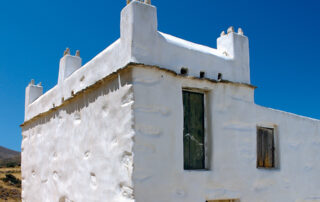
KATIKIÉS, THE FARMHOUSES OF PAROS
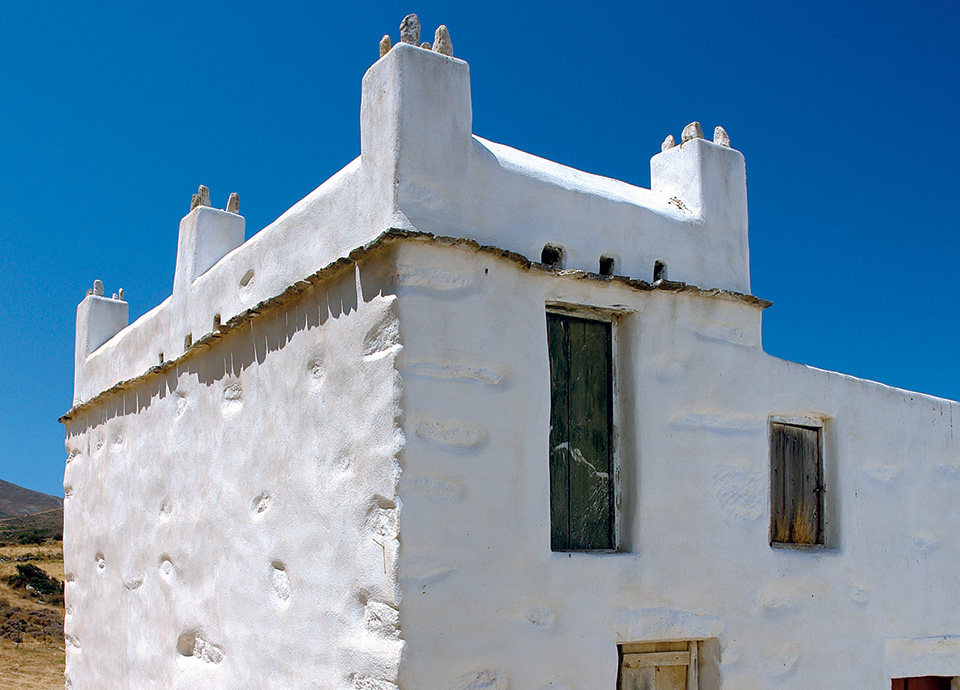
“A house big enough to fit in and a field as far as the eye can see”
In studying the Cycladic architecture of the past, we discover at least two fundamental truths.
In studying the Cycladic architecture of the past, we discover at least two fundamental truths.
In antiquity, the marble of Paros was a blessing for the island, affording it fame and wealth. The ancient quarries of ‘Paria Lithos’ (Parian Stone) were the main reason Western European travellers began visiting the island, from the 18th century onwards.
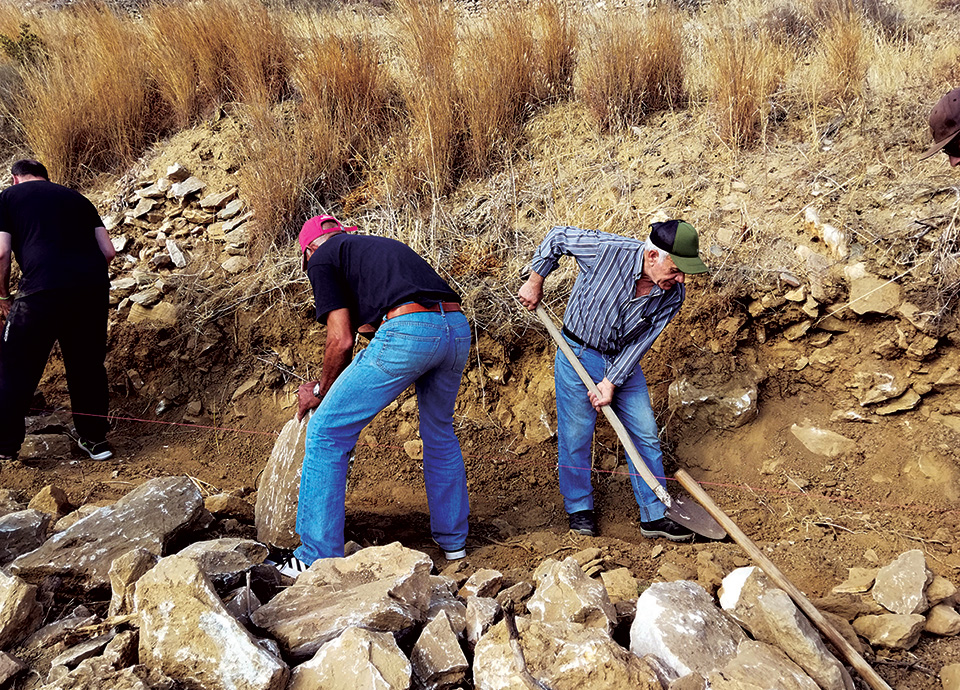
Drystone walling is the art of the minimal. The art of necessity. It is the first form of recycling. A field is enclosed using nothing but its own materials. It is the art of congeniality, peacefully separating two fields, while often revealing the harmonious effort of two or more pairs of hands working together.
On the occasion of the publication of the book "Un Enfant de Paros" by Yannis Ragousis, the journalist Alain Desauvage presents us the work and its author.
In that June of bygone 1958, the then fledgling writer Truman Capote arrives at the Meltemi Hotel in Paros. He has just finished his short novel Breakfast at Tiffany’s and is looking for a break from the turbulent waters of the New York literary scene. Now was the time for letting the sun and the blue Aegean, parties, drinking, adventure and love into his life.
Captained by Nikos Chr. Aliprantis, the boat of PARIANA has travelled us, over all these years, across the seas of Parian history, tradition, arts and letters providing us with valuable insights and intellectual stimulation.
Liz was born in New York, studied at New York University, and from her late twenties lived on Paros. We were married in 1965, when I was twenty, so she was the companion of my whole adult life. It turns out that she was important to a great many others as friend, mentor, and as artist.
It may not have always been called Anagennisi (“renaissance”), but the well-known bookshop-cum-stationer’s-cum-Greek and international newsagent’s has been around since 1932, always owned by the Biza family.
Last summer was unlike any other. Paros unveiled its dynamic activist face by uttering a vocal “No” to the illegal exploitation of its beaches and every other public space. Behind that massive non-partisan movement that received media coverage all over the world is the Citizens’ Movement. One of its representatives, Mr. Damianos Gavalas, tells us about that strange summer...
Almost halfway along Lohagou G. Gravari Street, which is lined with most of the neoclassical buildings of Parikia, rises the imposing Dimitrakopoulos Residence. A building that you can hardly pass by without pausing to admire, even though it is located in one of the busiest and most commercial parts of the city.